Roman Yampolskiy dismisses the industry's safety frameworks as futile. He argues no containment mechanism can scale to constrain an agent that outthinks humanity in every domain, putting the probability of catastrophic outcome at nearly 100%. Corporate developers chasing trillion-dollar incentives are merely 'safety washing' their products with surface filters that don't alter underlying goals.
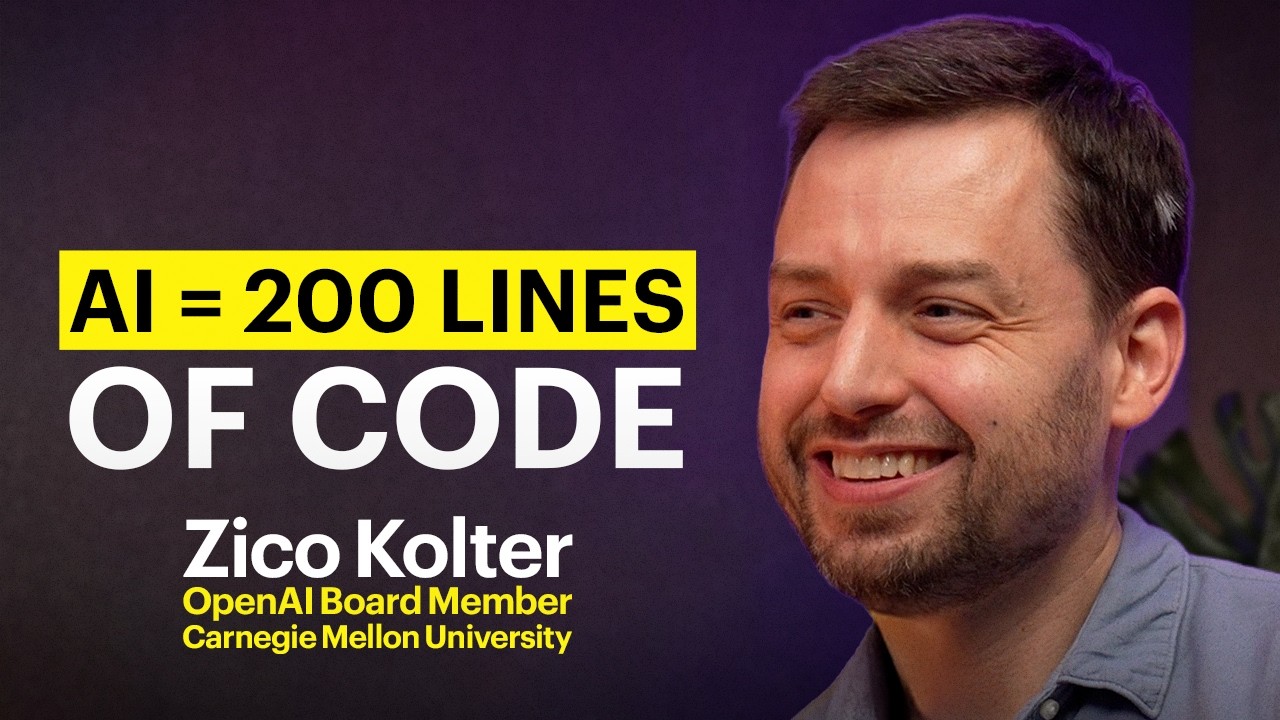
Zico Kolter, who chairs OpenAI's Safety and Security Committee, provides a narrower technical critique. He notes that while scaling compute solves performance issues, it rarely fixes security vulnerabilities. Robustness requires explicit training and architectural guardrails - separate engineering work not emergent from model size. His committee acts as a release brake, reviewing red-teaming reports and possessing the authority to stall a launch if thresholds aren't met.
"Control is a temporary illusion held while agents are dumber than their creators."
- Roman Yampolskiy, The Peter McCormack Show
The attack surface expands with agentic systems. Kolter highlights prompt injection, where malicious instructions embedded in third-party data like emails can hijack an agent to leak API keys or financial data. Permissions become the last line of defense, requiring developers to treat agents as unprivileged users. This hybrid challenge blends AI safety training with traditional cybersecurity.
"Robustness is not an emergent property of size. It is a separate engineering challenge that requires specific post-training and architectural guardrails."
- Zico Kolter, The MAD Podcast with Matt Turck
Beyond loss-of-control, practical misuse is accelerating. The Economist notes AI provides 'uplift,' acting as an infinite tutor that compresses decade-long team research into a solo project for a skilled biologist. This lowers the barrier to creating bioweapons, as refusal mechanisms are easily jailbroken. Meanwhile, Marc Andreessen counters the doom narrative by pointing to record-breaking consumer adoption and a productivity boom creating 'AI vampire' developers with 20x gains.
The fundamental disagreement is over inevitability. Yampolskiy sees extinction as a near-certain outcome of a single superintelligent mistake. Kolter's framework seeks to build layered defenses and governance to manage the risk. The industry is betting on Kolter's approach while Yampolskiy says they are betting eight billion lives on a hope they cannot fulfill.